In Conversation with Positive 911: Recognizing the Positive in Emergency Communications
Read an insider’s perspective on how small shifts in mindset and practices can dramatically boost morale, improve retention, and strengthen connections in 911 communications.
By:
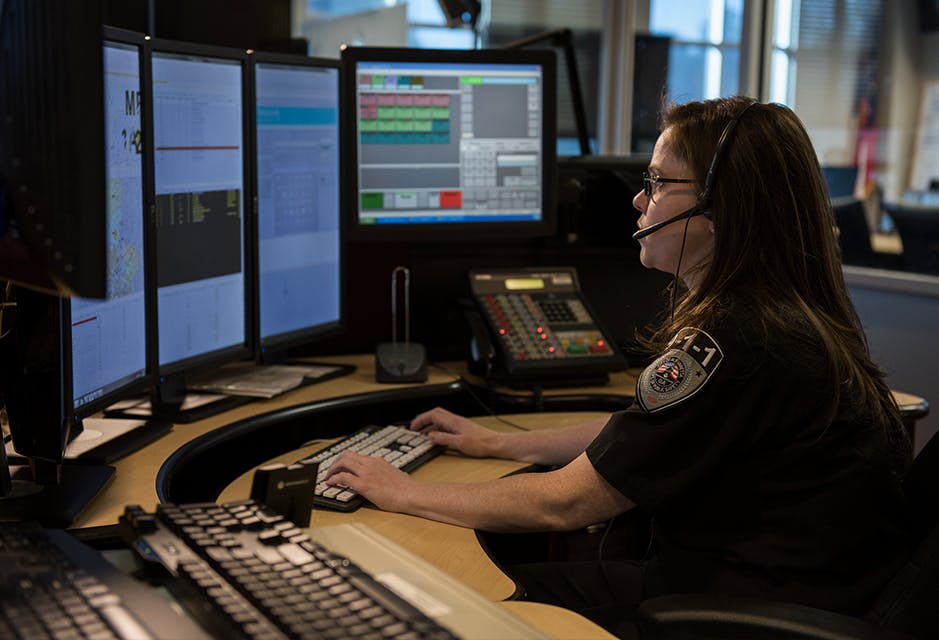
In the high-stakes world of public safety where pressure is frequent but recognition is rare, feedback has long been synonymous with performance reviews and metrics. But what if feedback could be something more? What if it could spark connection, nurture belonging, and transform culture?
That sentiment set the tone for our recent LinkedIn Live, “Recognizing the Positive: Changing the Culture of 911,” featuring:
- Alyssa Eichholtz, ENP – Co-founder of Positive 911, Public Safety Telecommunicator, Asst. Supervisor, and Public Information Officer (PIO) at Hancock County 911
- Casey Rives – Public Safety Solution Consultant at Verint, NENA Wellness Co-Chair, ICCRA Advisory Board, former 911 Dispatcher
- Malia Garcia – Marketing Manager at Verint
Together, they shared an insider’s perspective on how small shifts in mindset and practices can dramatically boost morale, improve retention, and strengthen connections in 911 communications. Let’s recap some of the highlights of this powerful conversation.
Turning Feedback into Belonging in Public Safety
Malia: In the 911 industry, our headset heroes face trauma daily. Their work environment is unlike any other, which is why feedback has to be different. It shouldn’t be just about performance. It should be about belonging, recognition, and support.
Alyssa: Positive 911 was founded to hopefully fill this space in the 911 community, trying to promote positivity. (…) I’ve been in this industry for a little over eight years, and something that I’ve seen is we talk so much about the negative aspects of our job. And though those are parts of our job, there’s a whole other side to it that is positive.
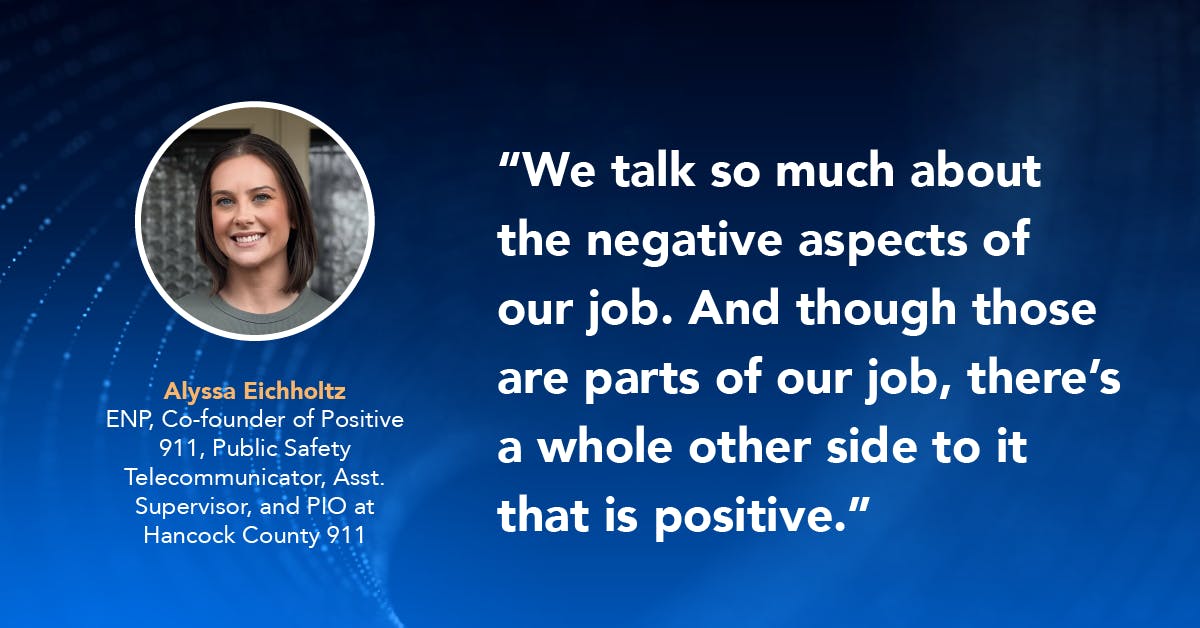
I tell people all the time: I love my job. I want to be able to tell people what good things I’m doing (…) and what this space holds—not just under the headset but also in the community as a whole, and what technologies and different lines of communication are doing.
Overcoming Obstacles with Recognition and Technology
Malia: That’s an important mindset to have when we think about emergency communications. Is there a culture that we want to uplift and make public because they are public servants, right? They are supporting our communities on so many foundational levels. How are other centers receiving that? Are you finding any obstacles or are people really wanting this type of programming?
Alyssa: One of the biggest hurdles we’re seeing (…) is we’re in a staffing crisis. Leaders of centers do want to do this, but it’s finding the time, the area to do this when there are so many other things. (…) So we are trying to find ways to make that as easy as possible through templates, through creating policies and through having that open conversation.
Casey: Recognition, positive feedback, and support all go into what we’re trying to operationalize with technology. (…) We want to make feedback not just about the mistakes, right? We want to catch mistakes, sure, but we want to highlight the wins as well.
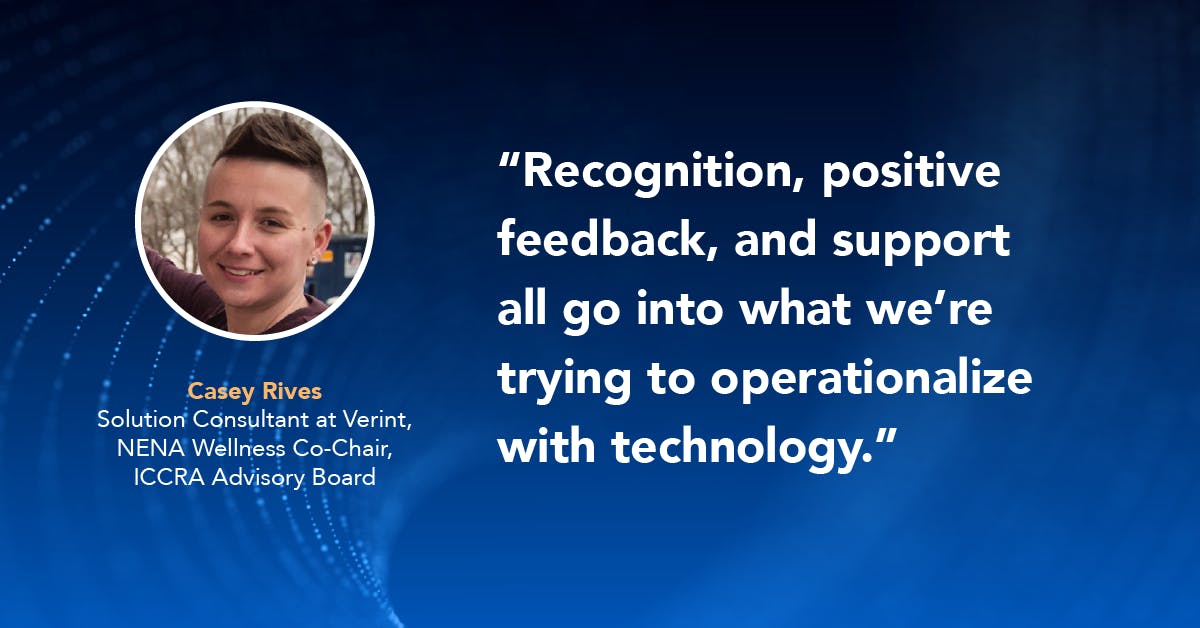
These are people that might be struggling in their own life, but they show up every day to help people in their worst moments. We need to let them know that we see them. For the technology point of view, it’s freeing up those leaders to be able to focus on the things that technology can’t do, such as interacting and building teams and showing positive recognition and building morale.
It’s easing the workflow for them and allowing them to focus on the people that are taking the calls.
Technology as a Catalyst for 911 Culture Shift
Malia: I love that idea of being able to look at what technology can take off a human’s plate, where the human can really be a human. (…) What are some of the things you’re already seeing happening? And what are some things that you want to see happen that are not quite there yet?
Alyssa: There’s a side of mental health too that isn’t just about burnout. It’s not just about how difficult my hardest call was. It’s not just about the bad and the ugly. There is a side of mental health that is about celebrating the good (…), celebrating others and the work that we’re doing. (…) To share some of the good things I think is a great way to help accelerate that process.

Casey: At conferences, I often do a session called “Why I Left and Why You Don’t Have to,” and it’s not about complaining about all the reasons why I left. It’s about recognizing those signs of burnout and how we can change that view of what we do and recognize the good so that people want to stay, because there’s a lot of good in that job and in the career of 911. (…)
For vendors, I think it’s important to show up not as your vendor, but as yourself and someone who wants to listen and be a part of that change.
Watch the Full LinkedIn Live
Watch the Full LinkedIn Live to hear more inspiring insights and learn how you can help change the culture of 911 communications, focusing on the positive and supporting telecommunicators with technology and empathy.
Learn more about Verint’s solutions for public safety here.