Verint Knowledge Management
Supercharge Your Knowledge Management with AI
Our market-leading AI-powered knowledge management solution provides a single source of truth for your agents and intelligent virtual assistants to deliver stronger AI outcomes.
AI Business Outcomes from Verint Customers
$13M Saved
A bank reduced call duration by 20 seconds across 4,500 agents handling 30M calls a year with Verint Knowledge Management
30% Containment Increase
A retailer with over 1 million annual interactions increased IVA containment with Verint Knowledge Management





Achieve Stronger, Faster, Measurable Outcomes
A Single Source of Truth
Integrate knowledge seamlessly across your business operations, powering self-service, increasing contact center efficiency, and ensuring consistency across the hybrid workforce.
Increase Agent Capacity
Use Verint Knowledge Management with any agent desktop to provide agents with the contextual knowledge they need to reduce average handle time.
Improve IVA Containment
Accelerate the creation of smarter Intelligent Virtual Assistants by leveraging accurate knowledge from a single source of truth.
Elevate CX and Improve Operational Efficiency



Power Great Customer Experiences with Verint Knowledge Management
Provide Faster Customer Service with Contextual Information
Your products and processes frequently change, and the amount of information housed within your organization grows daily. Verint Knowledge Management uses context from customer history to personalize results, resulting in the right knowledge appearing with little to no searching.
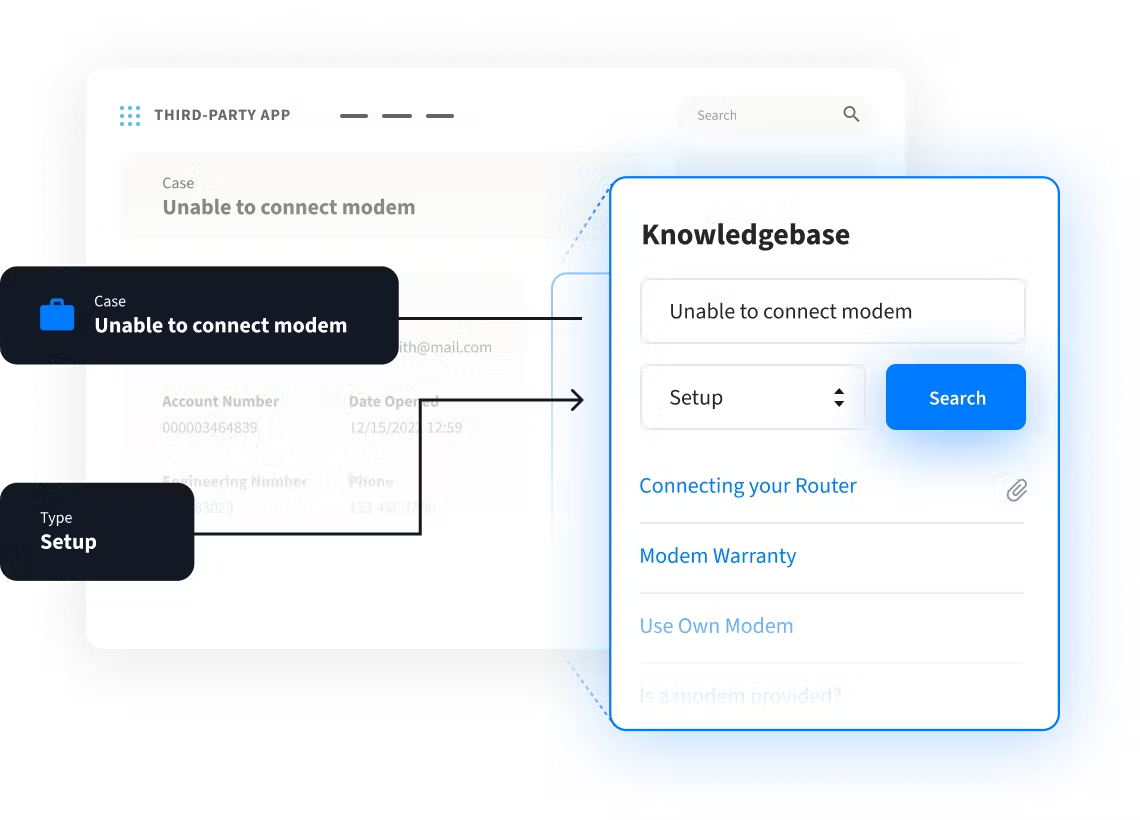
Remove Employee Burden with Automated Content Curation
New content is automatically analyzed and optimized for search, removing the burden of manual tagging and linking. This ensures your workforce has the contextual knowledge they need, regardless of channel, to answer questions quickly – helping address today’s complex omnichannel customer service expectations.
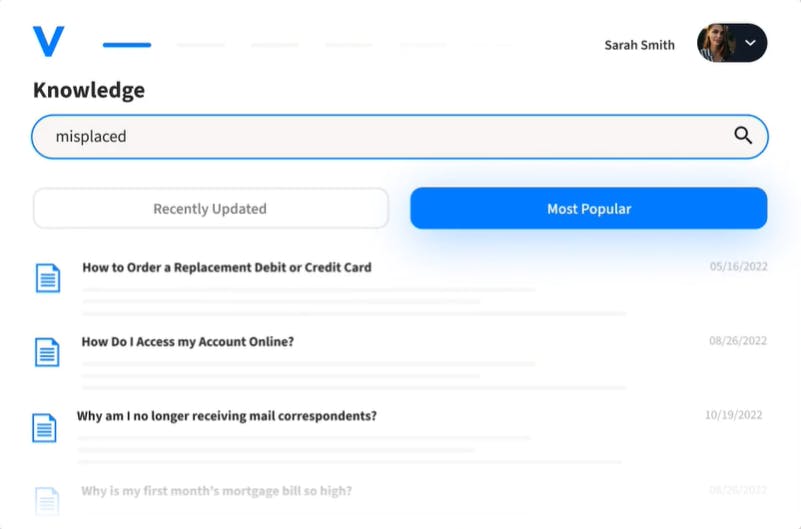
Reduce Inbound Volume by Enabling Customer Self-Service
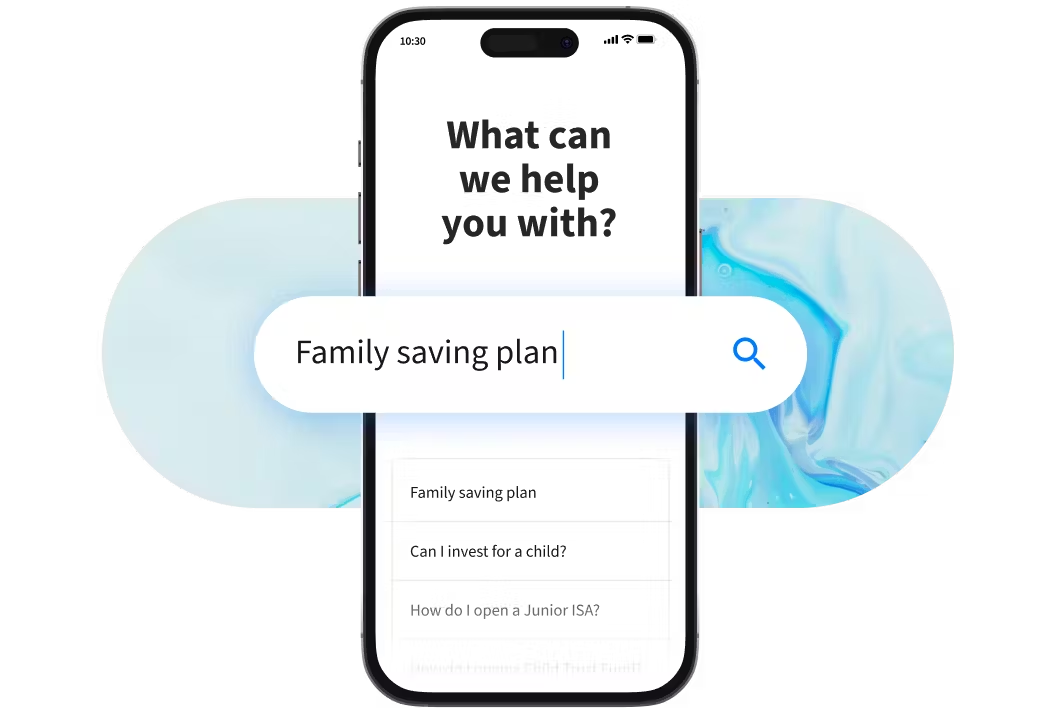
Provide knowledge through configurable web self-service, intelligent virtual assistants, and social community applications to help drive online customer satisfaction and reduce call center contacts. Verint Knowledge Management uses proprietary artificial intelligence (AI) to create a more automated, natural and effective way to connect people to answers.
A Proven Solution That Works at Enterprise Scale
Benefit from a proven solution deployed in some the largest, most complex organizations, spanning more than 30 languages, hundreds of thousands of content objects, and enterprise-level usage.


Halfords Steers Forward with Frictionless Service Delivery

“Our goal was to inspire customers with a differentiated and super-specialist offer. By reorganizing customer insights, we can support consumers with an integrated, unique, and more convenient services offer.”

Knowledge Management use cases



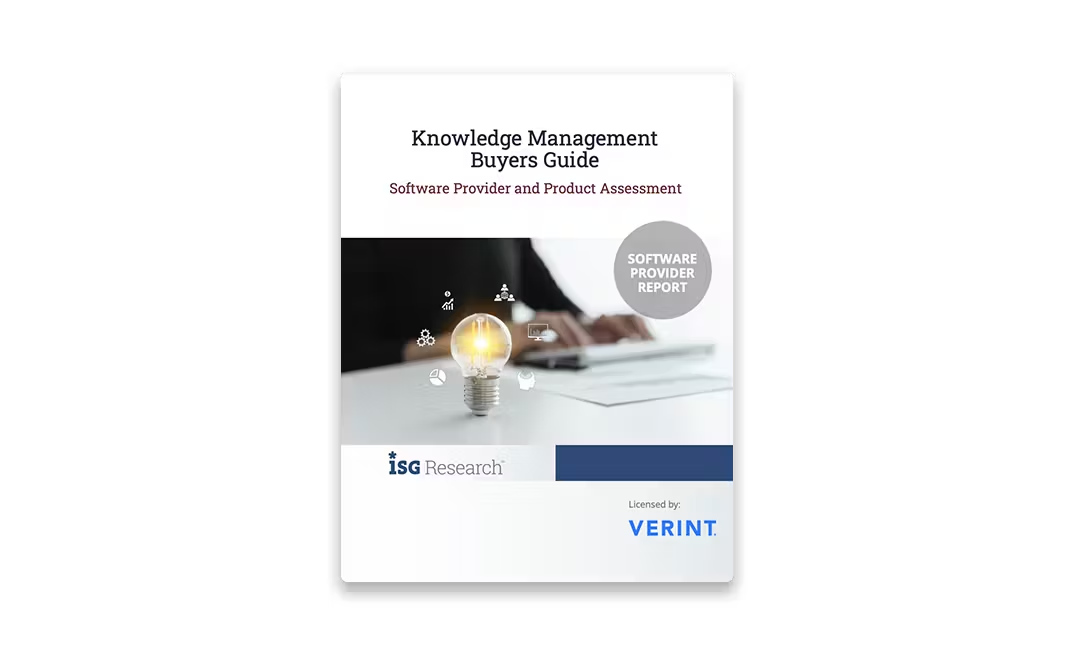
ISG Research: Knowledge Management Buyers Guide
The emergence of AI as a tool to improve the efficiency of customer service has highlighted the need for enterprises to rethink how they create, manage, and share their company knowledge.
To gain a better understanding of the buying criteria, and to see why Verint Knowledge Management™ was named a leader in the market, read the ISG Research™ Knowledge Management Buyers Guide now.

Featured Knowledge Management Resources


FAQs on Knowledge Management Platforms
A knowledge management system (KMS) is a type of information system that stores, analyzes, and disseminates knowledge within an organization. A KMS helps an organization capture, organize, and share knowledge so that it can be used more effectively.
There are many different types of knowledge management systems, ranging from simple document management systems to complex artificial intelligence-based systems.
Organizations today are facing an ever-increasing amount of data and information, which can be overwhelming and difficult to manage. Knowledge management systems help organizations to become more effective by quickly identifying new knowledge and expanding intelligence across regions and locations, to support the distributed workforce.
Traditional knowledge management relies on manual updates and keyword-based searches, which can be slow and inconsistent. AI-driven solutions automate content curation, use generative AI to summarize results, and provide intelligent recommendations. This ensures employees and customers get accurate, real-time information without searching through multiple sources.
Seamless integration across contact centers, self-service portals, and intelligent virtual assistants ensures consistent and accurate knowledge delivery across all customer touchpoints. This approach enables customers to find answers quickly, regardless of how they engage with a business.
Modern knowledge management tools are essential for managing organizational knowledge effectively. They utilize AI and natural language processing to identify and bridge knowledge gaps, handle unstructured data, and ensure data quality. These tools also support knowledge sharing and provide actionable insights, making it easier to manage and leverage knowledge assets within an organization.
AI plays a crucial role in enhancing knowledge management strategies by improving search capabilities and delivering relevant insights. Machine learning algorithms analyze user behavior and user intent to provide personalized knowledge delivery. AI also aids in ethical and compliance monitoring, ensuring that knowledge management practices are both efficient and compliant with regulations.
Transforming knowledge management processes can significantly benefit organizations by redefining how knowledge is discovered, shared, and utilized. By integrating AI and machine learning, organizations can gain deeper insights into their data, improve data management, and enhance overall knowledge delivery. This transformation leads to more effective management of knowledge assets and supports the continuous improvement of knowledge management strategies.
Yes, by streamlining agent workflows, improving self-service options, and automating knowledge discovery, businesses can reduce operational costs. Call deflection, fewer escalations, and optimized agent productivity lead to significant savings while improving service quality.
